
Located in beautiful downtown Van Nuys, California.


 Brave souls have dared to visit this site.
- CA SuperLottoPlus Picks, 10/10/2026 Draw >>> 1 5 23 34 47 Mega 27
- Mega Millions Picks, 10/09/2026 Draw >>> 2 7 16 63 70 Mega 8
While I still love Java as a programming language, it seems to be more troublesome than it is worth to keep the Java applets on here. It's almost as if the browser folks have declared war on Java. Firefox disables the java plugin if it's too far out of date. A lot of times you have to go through a lot of confirmations just to run a java applet, and even after doing all that, the browser still might not let you run it. My graph of picked lottery numbers is a good example.
So, it's time to make a change and convert the couple Java applets I had on here to javascript. I'll start with the ticker that shows the current winning numbers for SuperLottoPlus and Mega Millions. Then I'll work on the graph applet.
Regulators fined Bank of America (BAC) more than $1.2 billion on Tuesday over widespread failures in the banking giant's safeguards against money laundering and other illicit financial activity.
The Treasury Department said the nation's second-largest bank failed to properly monitor trillions of dollars in transactions and to report more than $5 billion in suspicious activity, including transactions potentially tied to Chinese money-laundering networks, narcotics trafficking, and fraud.
The enforcement actions include a $1.2 billion penalty from the Financial Crimes Enforcement Network (FinCEN), the third-largest fine in the Treasury Department's history after it fined crypto exchange Binance $3.4 billion in 2023 and TD Bank for $1.3 billion in 2024. The fine also includes a $750 million penalty from the Office of the Comptroller of the Currency (OCC), the largest ever imposed by that regulator.
The OCC penalty will be credited against FinCEN's assessment rather than added to it. Separately, a $11.6 million sanctions settlement brings the total penalties to more than $1.21 billion.
"Even the biggest financial institutions are not above the law," Treasury Secretary Scott Bessent said in a statement.
Bank of America's stock fell more than 2% after markets closed on Tuesday. It reports third quarter earnings Wednesday morning.
The bank said it will include a "non-tax-deductible charge of $1.2 billion impacting net income by approximately 17 cents per share" in its third quarter results.
"Financial crime compliance is serious, and we are responsible for getting it right," a Bank of America spokesperson said in an email statement, adding that the Charlotte, North Carolina based lender has invested "billions of dollars in technology" and dedicated "thousands of employees to combat financial crime" to resolve the deficiencies.
Regulators said Bank of America's failures extended across its transaction monitoring systems, customer due diligence, and internal oversight.
The bank failed to report more than $5 billion in suspicious transactions, including over $1 billion involving national security-related and other priority illicit finance risks.
FinCEN said Bank of America admitted to willfully violating the Bank Secrecy Act and had effectively outsourced substantial portions of its suspicious activity detection responsibilities to law enforcement and other financial institutions.
The bank also prioritized revenue over compliance resources, according to Treasury, allowing suspicious transactions to go uninvestigated for extended periods.
The penalties come nearly two years after Bank of America agreed to a December 2024 cease-and-desist order requiring it to address longstanding weaknesses in its anti-money laundering controls.
The OCC said the bank failed to make sufficient progress despite that earlier enforcement action.
"Bank of America's poor response to its [Bank Secrecy Act] deficiencies is unacceptable," Comptroller of the Currency Jonathan Gould said, describing continued breakdowns in internal controls.
Separately, Treasury's Office of Foreign Assets Control announced an $11.6 million settlement involving 475 apparent violations of sanctions programs targeting Russia, Iran, and other countries and activities.
As part of the latest enforcement actions, Bank of America must conduct a review of previously undetected suspicious transactions with an outside party and undergo independent assessments of its compliance controls.
Mike Mayo, a Wells Fargo equity analyst who covers the bank called the action a “black eye” for Bank of America while describing the one-time charge as “digestible.”
David Hollerith covers a range of developments throughout the financial sector, from Wall Street to banking and asset management to crypto and fintech. Email him at david.hollerith@yahoofinance.com. Follow him on X at @DsHollers.
Click here for in-depth analysis of the latest stock market news and events moving stock prices
Read the latest financial and business news from Yahoo Finance
This article originally appeared on Yahoo Finance at https://finance.yahoo.com/markets/article/bank-of-america-hit-with-12-billion-penalty-over-money-laundering-failures-201623796.htmlROME (AP) — Pope Leo XIV underwent surgery Tuesday that confirmed that he has lung cancer, and doctors removed the lower lobe of his right lung, the Vatican said.
Tests confirmed a diagnosis of lung adenocarcinoma, the Vatican said in a medical bulletin after the surgery. It said the diagnosis had been suspected by preoperative tests and was confirmed during surgery.
The statement made no mention of treatment going forward, and the Vatican said doctors were not currently speaking of chemotherapy or other therapies pending the results of other tests. The Vatican press office noted the medical statement spoke of the "radical" removal of the lobe as an indication that doctors removed all suspect tissue in hopes of removing any lingering traces of the cancer.
Leo's lymph nodes also would have been removed and tested, to determine if the cancer had spread, and there was no word yet on those test results.
"Adenocarcinoma is the most common (type of lung cancer), also with the most favorable prognosis," said Dr. Stephen Liu, a lung cancer expert at Georgetown's Lombardi Comprehensive Cancer Center. "While we know the diagnosis we now need to know the stage."
"We now need to know how big it is, how many spots in the lung are involved. Is it just one nodule, or more than one, and the lymph nodes, are they cancerous?" Liu said.
If the cancer has spread, more tests will be needed to determine what kind of therapy to pursue, he said. Options include chemotherapy, a combination of chemotherapy and immunotherapy or targeted therapy, which involves oral pills for specific cancers.
The Vatican says the surgery was successful
The 71-year-old was in the operating room for about three hours, the Vatican statement said. The surgery itself lasted approximately 90 minutes.
"The surgery was successful, and there were no complications," the statement said, adding that the pope later returned to his room.
The right lung is divided into three sections or lobes while the left has two. After one lobe is removed, the remainder of the lung can gradually compensate, especially in otherwise healthy and physically active people.
Leo had walked into Rome's Gemelli hospital through the main entrance earlier in the day and waved to dozens of well-wishers who had gathered to greet him. The Vatican said the surgery would be performed by a team led by Gemelli's chief thoracic surgeon, Dr. Stefano Margaritora.
The American pontiff has offered a rare level of transparency about the first publicly disclosed major health problem of his 17-month papacy. He revealed the discovery of the localized nodule during his Sunday noon prayer and announced that he would have it removed.
Oncologists said prior to the operation that even if the nodule turned out to be cancerous, Leo's prognosis would be "excellent" since it would have been removed at an early stage.
The Vatican on Monday canceled all Leo's audiences through Oct. 20.
While Gemelli has a specific papal apartment that past popes have used, complete with a private chapel on the 10th floor, Leo will actually be staying in a nearby room since the papal apartment is undergoing renovations, according to the Vatican press office.
Recovery could allow November travel to South America
There was no word on whether Leo would be able to keep his planned trip to South America next month.
Oncologists often advise patients not to fly for three weeks after surgery — which would give the pope just the interval needed to make his planned Nov. 6-17 trip to Uruguay, Argentina and Peru, depending on his recovery.
The current itinerary for the trip is ambitious and the longest of his papacy to date, calling for Leo to clock just over 31,000 kilometers (19,000 miles) on a dozen flights and two helicopter rides, and a significant altitude change in Peru.
"He has decided to undergo surgery soon in order to not change his plans for future overseas trips, so there is no need to worry, as it is not an emergency," said Tokyo Cardinal Kikuchi Tsutomu, who saw Leo on Monday.
A lung nodule is a small abnormal area measuring less than 3 centimeters (1.2 inches) that sometimes appears on a CT scan of the chest or abdomen. Often, the scans are done to investigate trauma or a lung infection, unrelated to a lung cancer screening. A nodule can be benign or malignant, and oftentimes surgical removal is recommended both to establish whether it is cancer and to treat a malignancy while it is still localized.
Pope was hospitalized for typhoid fever in 1985
This is believed to be the second hospitalization for Leo, who is known to be sporty and in good shape, with weekly tennis games and swimming.
As a young missionary priest, he came down with typhoid fever in 1985, soon after arriving in Chulucanas, Peru. The illness and hospitalization were a cathartic moment for him to decide to stay in the poverty and discomfort of Peru after living in relative comfort in Rome — a decision that ultimately paved the way to his papacy, according to an interview Leo gave to Elise Ann Allen in 2025 for "Pope Leo XIV: The Biography."
According to the book, Leo said he prayed to God to let him die rather than suffer the "horrible" pain of the fever. "I was hooked up to an IV, and I said, 'If this is your sense of humor, Lord, I think you could do a little better.'
"Obviously, I survived; I recovered, but it turned out to be a very significant moment for me, because it was like, 'Well, you've already dealt with the illness; you already see what the needs are here — the order, the Augustinians, the church are telling you, 'We need you here; go for it.' I never looked back."
___
Barry reported from Milan. Associated Press writer Lauran Neergaard in Washington contributed to this report.
___
Associated Press religion coverage receives support through the AP's collaboration with The Conversation US, with funding from Lilly Endowment Inc. The AP is solely responsible for this content.
This article originally appeared on Associated Press at https://www.yahoo.com/news/us/articles/pope-leo-xiv-set-enter-050053895.htmlPresident Trump has begun to downplay his new deal with Russia after a plan to allow imports of Russian diesel into the US came under withering criticism, even from members of his own party.
"It's a deal for the world ... It's not a deal with me," Trump told reporters on Tuesday morning, repeating that it was "not a USA deal."
"They're releasing it to the entire world," Trump added, after making similar comments on Monday that the deal would help US farmers, but said, "It's not really a deal with me, it's a deal for the rest of the world."
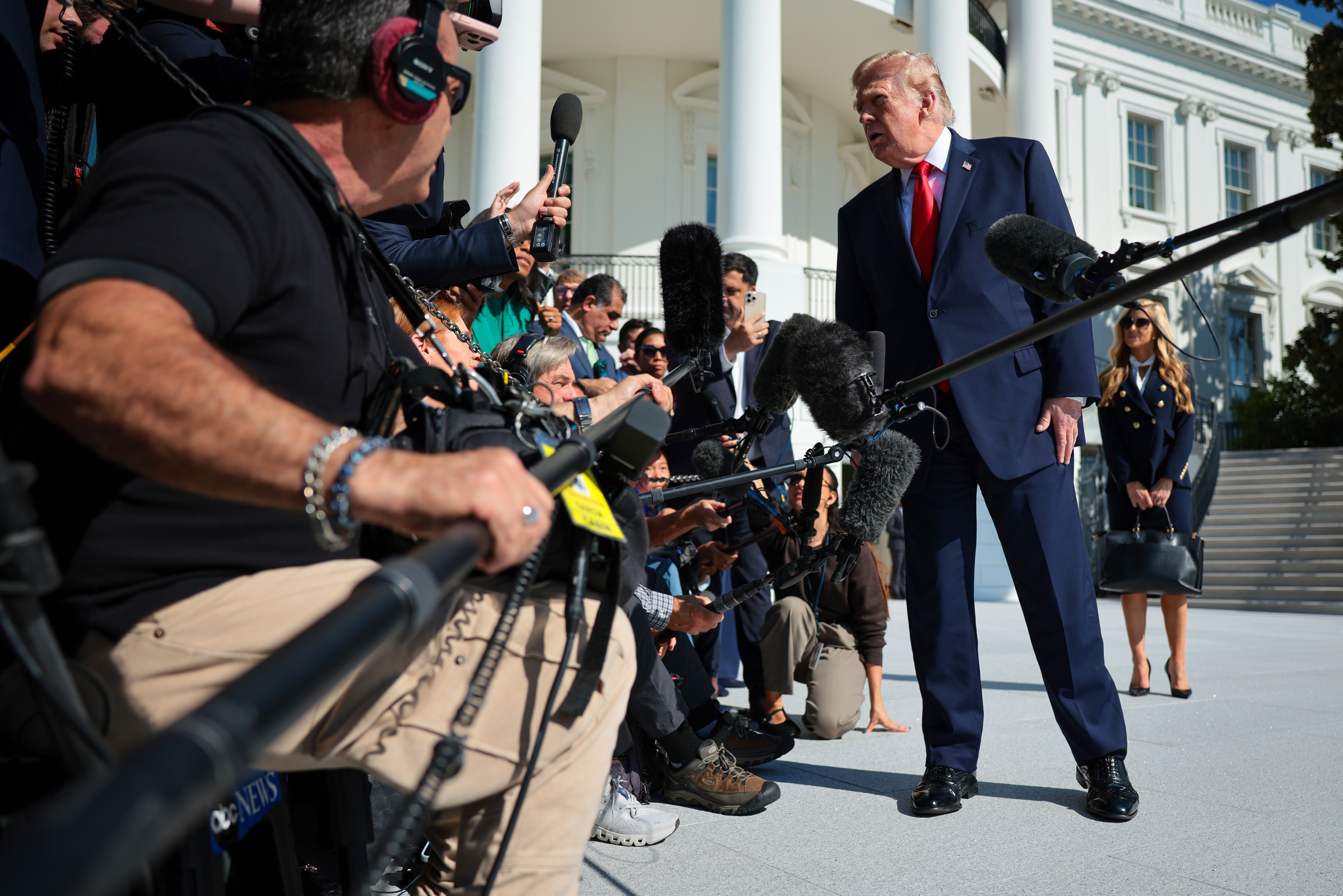
The contention is a marked shift since Trump announced the plans last week.
"I have just concluded a highly successful discussion with President Vladimir Putin, of Russia," he wrote on Truth Social, adding that it will be a "great announcement...for Americans and, indeed, the World."
The deal will include a quick release of 300,000 tons (about 2.2 million barrels) of diesel. That would then be followed by another 500,000 in November and 1 million tons "immediately thereafter" for a total of about 13.5 million barrels.
His administration quickly authorized US purchases of Russian diesel through next April.
Calls on the president to 'immediately reverse course'
Blowback to the plan has been notable — even within Trump's own party.
A bipartisan group of senators called on the president to "immediately reverse course," in a letter signed by Republican Sens. Susan Collins of Maine, Lisa Murkowski of Alaska, Thom Tillis of North Carolina, and John Curtis of Utah, along with three Democrats.
The plan has also received a lukewarm reception on the midterm campaign trail, with figures like Republican Mike Rogers, who is locked in a tight Senate contest in Michigan, distancing himself from it.
Some energy experts suggest the deal might run afoul of US law, while others suggest it simply won't work since Russia seems to lack enough excess diesel refining capacity to markedly increase exports and move US or global diesel prices.
Read more: How oil price shocks ripple through your wallet, from gas to groceries
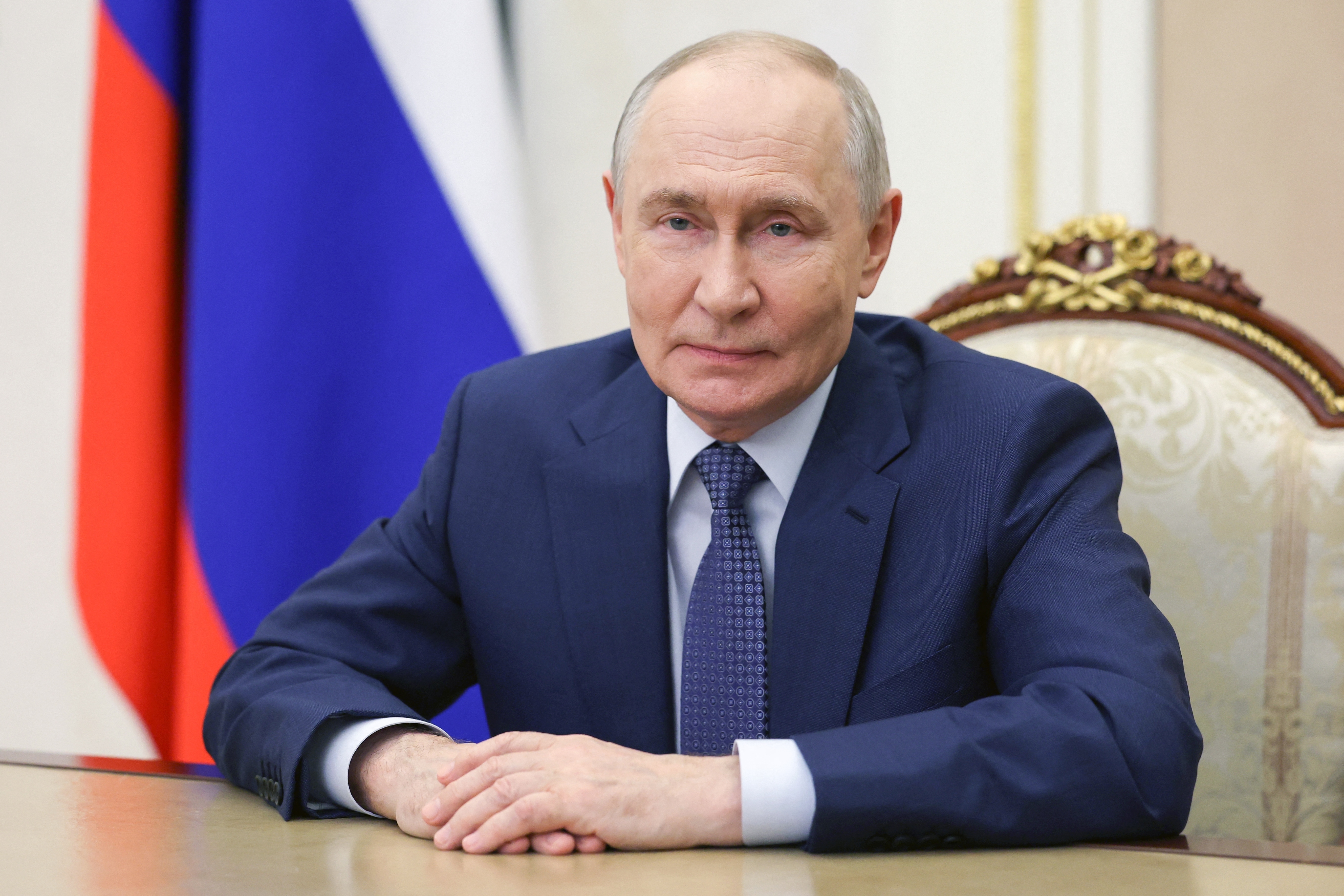
Indeed, the current average price of diesel, according to the American Automobile Association, was almost $6.28 per gallon on Tuesday, a tick up from almost $6.27 per gallon on Monday.
Wholesale diesel prices are "not blinking over Russia/US 'deal'" Patrick De Haan, the head of petroleum analysis at GasBuddy, noted on Tuesday. "Truckers and farmers not going to see any relief anytime soon."
But Trump continued to defend the deal and dodged a question about another major critique, which is that it could fund Russia's war efforts against Ukraine.
"Nobody's told me anything," the president said Tuesday in response to whether Russia could use any of the funds to further attack Ukraine.
Trump also claimed without evidence that the deal had brought down prices and reaffirmed that his larger goal was to end the overall conflict.
He said of Putin and Ukrainian President Volodymyr Zelensky, "I think they both want it to end, you know, honestly, they both want it to end, and they don't know how to get to that point."
Ben Werschkul is a Washington correspondent for Yahoo Finance.
Read the latest financial and business news from Yahoo Finance
This article originally appeared on Yahoo Finance at https://finance.yahoo.com/energy/article/not-a-usa-deal-trump-downplays-russian-diesel-plan-in-the-face-of-gop-criticism-182030595.html- Newsfeed provided by Yahoo! News
- Newsfeed provided by Yahoo! News

